Table Of Content
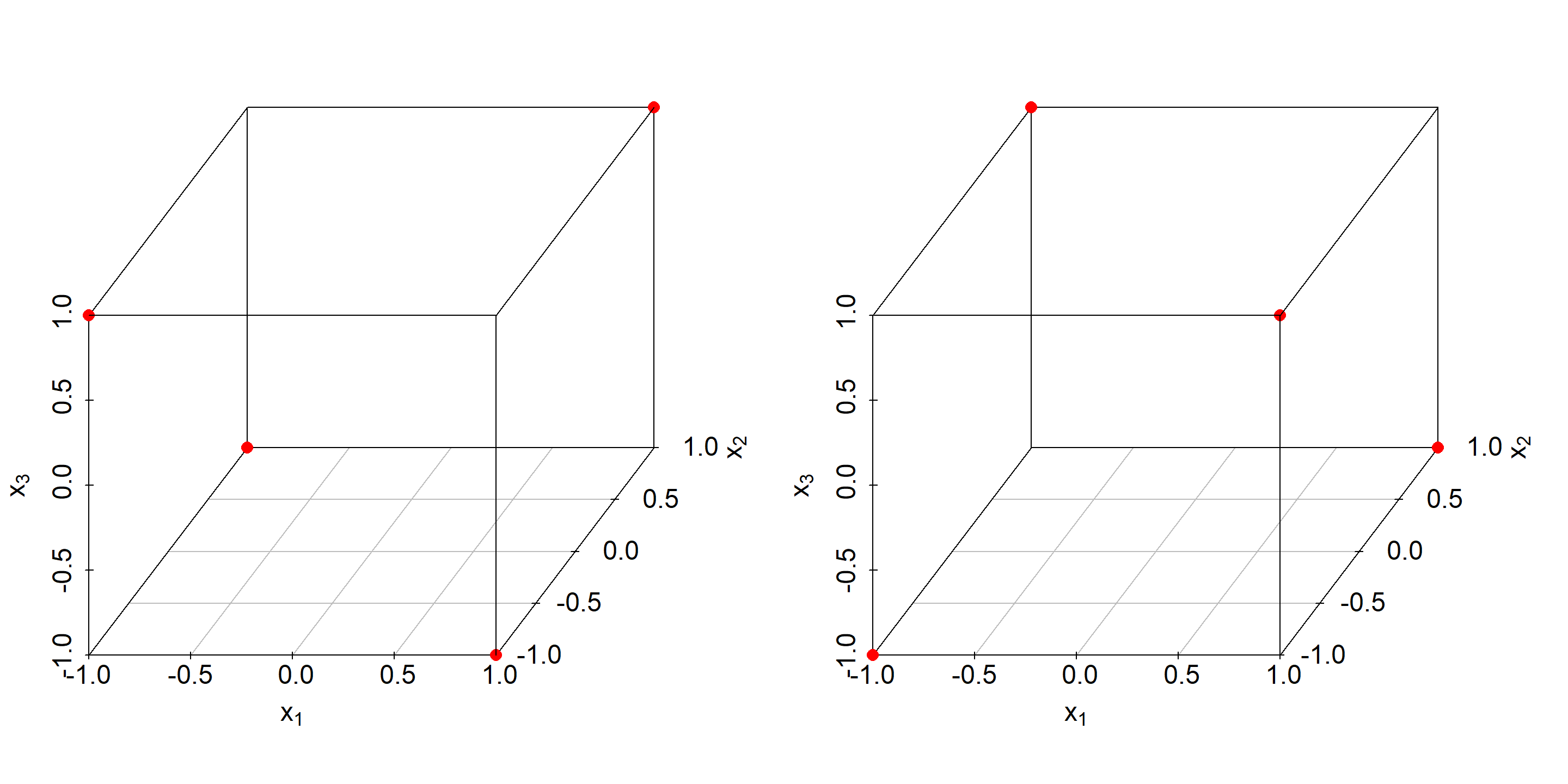
The contour plots below for our example show the color coded average response over the region of interest. The effect of these changes in colors is to show the twist in the plane. And you picked your low and high level as illustrated above, then you would have missed capturing the true relationship. Your conclusion would probably be that there is no effect of that factor. You need to have some understanding of what your factor is to make a good judgment about where the levels should be. In the end, you want to make sure that you choose levels in the region of that factor where you are actually interested and are somewhat aware of a functional relationship between the factor and the response.
3. Factorial designs: Round 2
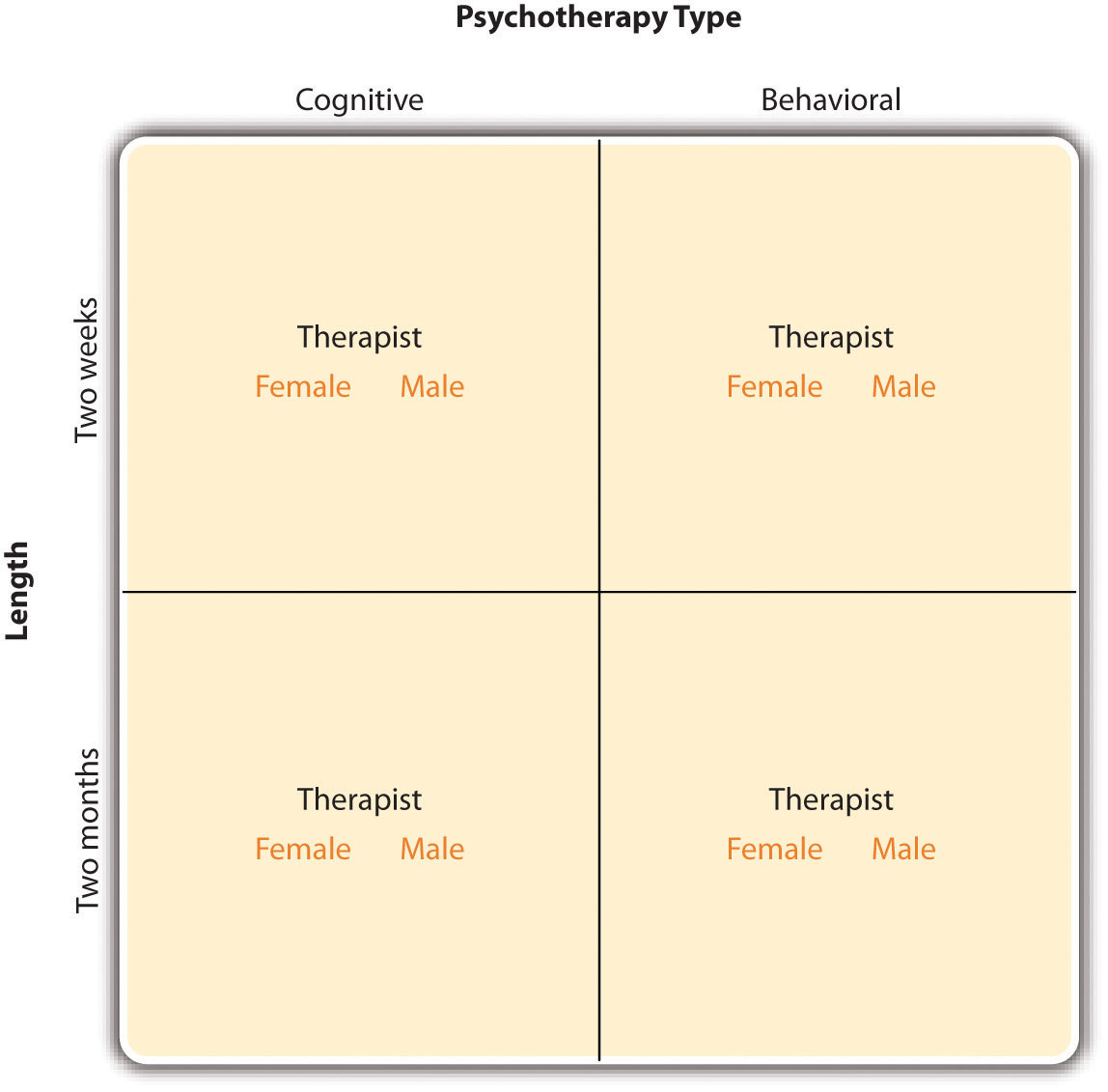
For example, Schnall and her colleagues had their participants rate their level of disgust to be sure that those in the messy room actually felt more disgusted than those in the clean room. The number of digits tells you how many independent variables (IVs) there are in an experiment, while the value of each number tells you how many levels there are for each independent variable. However, let’s imagine that she is also interested in learning if sleep deprivation impacts the driving abilities of men and women differently. She has just added a second independent variable of interest (sex of the driver) into her study, which now makes it a factorial design.
1.4. Measures of the Same Construct
Replicates are repeats of each trial that help determine the reproducibility of the design, thus increasing the number of trials and accuracy of the DOE. To add replicates, click the "Replicate design" radio button in the "Modify Design" menu. Once the design has been chosen, the "Factors...", "Options..." and "Results..." buttons become active in the "Create Factorial Designs" option menu.
3.5. Identifying main effects and interactions
Because experiments from the POD are time consuming, a half fraction design of 8 trial was used. After the complete DOE study has been performed, Minitab can be used to analyze the effect of experimental results (referred to as responses) on the factors specified in the design. The first step in analyzing the results is entering the responses into the DOE table. In the columns to the right of the last factor, enter each response as seen in the figure below. The above table contains all the conditions required for a full factorial DOE. Minitab displays the standard order and randomized run order in columns C1 and C2, respectively.
How to Interpret Causal Effects

As seen in the above plots, RPM has significant effects for both responses and pressure has a statistically significant effect on wt% methanol in biodiesel. Neither flow rate or ratio have statistically significant effects on either response. The Pareto charts are bar charts which allow users to easily see which factors have significant effects. Factors A - D can be renamed to represent the actual factors of the system.
Sums of Squares
So, the main effect of wearing hats is to add 1 inch to a person’s height. As expected, we see that the average height is 1 inch taller when subjects wear shoes vs. do not wear shoes. So, the main effect of wearing shoes is to add 1 inch to a person’s height. 9.1 Setting Up a Factorial Experiment by Paul C. Price, Rajiv Jhangiani, I-Chant A. Chiang, Dana C. Leighton, & Carrie Cuttler is licensed under a Creative Commons Attribution-NonCommercial-ShareAlike 4.0 International License, except where otherwise noted. Explore Psychology provides information about psychology and mental health.
Significance Level
Frank Yates made significant contributions, particularly in the analysis of designs, by the Yates analysis. Cluster analysis is used to group similar cases or observations together based on similarities or differences in their characteristics. Archival data involves using existing records or data, such as medical records, administrative records, or historical documents, as a source of information. Setting Up a Factorial Experiment Copyright © 2022 by Rajiv S. Jhangiani; I-Chant A. Chiang; Carrie Cuttler; and Dana C. Leighton is licensed under a Creative Commons Attribution-NonCommercial-ShareAlike 4.0 International License, except where otherwise noted.
This paper highlights decisions and challenges related to the use of factorial designs, with the expectation that their careful consideration will improve the design, implementation, and interpretation of factorial experiments. Chakraborty et al., (Chakraborty et al., 2009) noted that factorial designs may not perform optimally for intervention selection in cases where there are weak main effects, but relatively strong interaction effects. Unfortunately, this situation may be a fairly common occurrence in factorial experiments of clinical interventions (e.g., Cook et al., 2016; Piper et al., 2016; Schlam et al., 2016). In addition, the complexity of delivering multiple combinations of components can be reduced by using a fractional factorial design (Collins et al., 2009), which reduces the number of different component combinations per the number of factors used. While more research on IC interactions is surely needed, our research has consistently found such interactions (Cook et al., 2016; Fraser et al., 2014; Piper et al., 2016; Schlam et al., 2016).
Based on this for this example that we have just looked at, we can conclude that following factors are important, A, C, D, (of the main effects) and AC and AD of the two-way interactions. As these researchers expected, participants who were lower in SES tended to give away more of their points than participants who were higher in SES. This is consistent with the idea that being lower in SES causes people to be more generous. But there are also plausible third variables that could explain this relationship. It could be, for example, that people who are lower in SES tend to be more religious and that it is their greater religiosity that causes them to be more generous.
Likewise, if people who are healthier tend to be happier, perhaps this is only because they tend to make more money. But a multiple regression analysis including both income and happiness as independent variables would show whether each one makes a contribution to happiness when the other is taken into account. Research like this, by the way, has shown both income and health make extremely small contributions to happiness except in the case of severe poverty or illness [Die00]. This is important because, as always, one must be cautious about inferring causality from correlational studies because of the directionality and third-variable problems. For example, a main effect of participants’ moods on their willingness to have unprotected sex might be caused by any other variable that happens to be correlated with their moods. The simplest way to understand a main effect is to pretend that the other independent variables do not exist.
Experiment Design Guidelines for Product Analysts — Part 2/3 - ResearchGate
Experiment Design Guidelines for Product Analysts — Part 2/3.
Posted: Mon, 12 Jul 2021 07:00:00 GMT [source]
However, in the second study, light plus behavioral therapy significantly moved sleep onset approximately 50 minutes earlier, on average, and increased nightly sleep time by approximately 43 minutes. An ANOVA table provides all the information an experimenter needs to (1) test hypotheses and (2) assess the magnitude of treatment effects. All three effects are assumed to be normally and independently distributed (NID).
When we find that the independent variable did not influence the dependent variable, then we say there was no main effect. For example, imagine that a researcher wants to do an experiment looking at whether sleep deprivation hurts reaction times during a driving test. If she were only to perform the experiment using these variables–the sleep deprivation being the independent variable and the performance on the driving test being the dependent variable–it would be an example of a simple experiment. In the Graphs menu shown above, the three effects plots for "Normal", "Half Normal", and "Pareto" were selected.
Nature, he suggests, will best respond to "a logical and carefully thought out questionnaire". A factorial design allows the effect of several factors and even interactions between them to be determined with the same number of trials as are necessary to determine any one of the effects by itself with the same degree of accuracy. Overall, the purpose of experimental design is to provide a rigorous, systematic, and scientific method for testing hypotheses and establishing cause-and-effect relationships between variables. Experimental design is a powerful tool for advancing scientific knowledge and informing evidence-based practice in various fields, including psychology, biology, medicine, engineering, and social sciences. In this situation, the investigators were uninterested in the effects of behavioral therapy alone. Nonetheless, the conducted studies confounded several design features that slightly complicate the interpretation of their findings.


No comments:
Post a Comment